
Another late one. (Oops.) This Jumbo was okay, albeit a tad mechanical. I didn’t sense this at the time, to be fair, but writing this post was a bit of a slog, with what felt like a lot of beginning and end letters to document, along with umpteen insertions and deletions. The Times crossword clichés were out in force too, so there are 13 Jumbos to go before I wrap up these posts.
On those clichés, it’s interesting to note that The Times no longer requires people to be dead before they can feature in cryptic crosswords. Apparently this change has been in place a couple of months now, but we’ve yet to see it filter into the Jumbo cryptic. Well, it’s a start. If they’re easing up on that requirement then surely there can be no argument against including more modern cultural references in their crosswords too? We’ll see…
Anyway, now that the competition deadline has long since past, you can find my completed grid below along with explanations of my solutions where I have them. I hope you find them helpful. If a recent Jumbo has kept you up all night then you might find my Just For Fun page of use, where you’ll find links to solutions for hundreds of the things.
Thanks again for your patience and input. I appreciate the desire some have to keep this blog going after I hang up my black biro, maybe with a blank post each week for everyone to comment and collaborate upon, but I’m not sure that that would work in practice. I would imagine there are other sites better suited to that. Whatever happens, till next time, stay safe out there kids.
LP

The case for the prosecution


Across clues
- Excellent meal, but requiring no repetition (5)
Answer: SUPER (i.e. “excellent”). Solution is SUPPER (i.e. “meal”) with the repeated P removed (indicated by “but requiring no repetition”).
- Money received of those people, having acquired a promenade? (4,3,3)
Answer: TAKE THE AIR (i.e. “promenade” or walk for pleasure). Solution is TAKE (i.e. “money received”) followed by THEIR (i.e. “of those people”) once wrapped around or “acquiring” A, like so: TAKE-THE(A)IR.
- Learned person positioned to accept leading figures (6)
Answer: SAVANT (i.e. “learned person”). Solution is SAT (i.e. “positioned”) once wrapped around or “accepting” VAN (i.e. “leading figures”, short for a vanguard), like so: SA(VAN)T.
- Ready to accept unimaginative cut in revised course (9)
Answer: CREDULOUS (i.e. “ready to accept”). Solution is DULL (i.e. “unimaginative”) once its last letter has been removed (indicated by “cut”) and the remainder placed “in” an anagram (indicated by “revised”) of COURSE, like so: CRE(DUL)OUS.
- Duffers upset with this society after time, old fogeys (7,6)
Answer: STUFFED SHIRTS (i.e. “old fogeys”). Solution is an anagram (indicated by “upset”) of DUFFERS and THIS, followed by S (a recognised abbreviation of “society”) once placed “after” T (ditto “time”), like so: STUFFEDSHIR-T-S.
- Club second to enter sports venue beside lake (7)
Answer: ARSENAL (i.e. football “club”). Solution is S (a recognised abbreviation of “second”) placed in or “entering” ARENA (i.e. “sports venue”) and followed by L (a recognised abbreviation of “lake”), like so: AR(S)ENA-L.
- Love cricket club to capture trophy, an ultimately quality possession (9)
Answer: OCCUPANCY (i.e. “possession”). Solution is O (i.e. “love”, a zero score in tennis) followed by CC (a recognised abbreviation of “cricket club”) once wrapped around or “capturing” CUP (i.e. “trophy”) and AN. This is all then followed by Y (i.e. “ultimately quality”, i.e. the last letter of “quality”), like so: O-C(CUP-AN)C-Y.
- Precipitous cliff alongside right-hand edge of railway – alarming (5)
Answer: SCARY (i.e. “alarming”). Solution is SCAR (i.e. “precipitous cliff”) followed by Y (i.e. “right-hand edge of railway”, i.e. the last letter of “railway”).
- Important measures having impact, limiting female work at night (9,5)
Answer: GRAVEYARD SHIFT (i.e. “work at night”). Solution is GRAVE (i.e. “important”) followed by YARDS (i.e. “measures”) and HIT (i.e. “impact”) once wrapped around or “limiting” F (a recognised abbreviation of “female”), like so: GRAVE-YARDS-HI(F)T.
- Diplomacy is hedging about means to achieve end (7)
Answer: TACTICS (i.e. “means to achieve end”). Solution is TACT (i.e. “diplomacy”) followed by IS once wrapped around or “hedging” C (i.e. “about”, specifically a recognised abbreviation of “circa”), like so: TACT-I(C)S.
- Daring problem linked to uranium, say, on the radio (10)
Answer: METTLESOME (i.e. “daring”). Solution comprises homophones (indicated by “on the radio”) of SUM (i.e. a mathematical “problem”) and METAL (i.e. “uranium, say”). “Linked to” indicates SOME is placed on or after METTLE, like so: METTLE-SOME.
- Where doctors work – distribute The Lancet here? Mostly (6,6)
Answer: HEALTH CENTRE (i.e. “where doctors work”). Solution is an anagram (indicated by “distribute”) of THE LANCET HERE once the last letter has been removed (indicated by “mostly”).
- One Greek character attached to … a burning wheel, apparently (5)
Answer: IXION. The solution satisfies the clue as a whole. In Greek myth, Ixion was punished by Zeus by being bound to a winged fiery wheel spinning for all time. The solution also comprises I (i.e. “[Roman numeral] one”), XI (i.e. “Greek character”, specifically the fourteenth letter of the Greek alphabet) and ON (i.e. “attached to”). Clever, yes, but Greek mythology is a massive Times crossword cliché, so have a demerit.
- Speculative account taking in broadcast media (8)
Answer: ACADEMIC (i.e. “speculative” – Chambers offers “theoretical only, of no practical importance or consequence”). Solution is ACC (a recognised abbreviation of “account”) wrapped around or “taking in” an anagram (indicated by “broadcast”) of MEDIA, like so: AC(ADEMI)C.
- Formalities favouring Conservative in contrivance (8)
Answer: PROTOCOL (i.e. “formalities”). Solution is PRO (i.e. “favouring”) followed by C (a recognised abbreviation of “Conservative”) once placed “in” TOOL (i.e. “contrivance”), like so: PRO-TO(C)OL.
- Italian composer lost his grip around finale of piece (8)
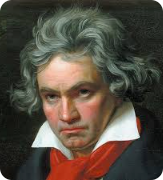
Answer: Ottorino RESPIGHI (i.e. “Italian composer”). Solution is an anagram (indicated by “lost”) of HIS GRIP once wrapped “around” E (i.e. “finale of piece”, i.e. the last letter of “piece”), like so: R(E)SPIGHI. The wordplay was fairly obvious once you got a couple of intersecting letters, but, let’s face it, you’re only nailing this one if you know the guy. Needless to say, Bradford’s was deployed toot bloody sweet. I’m not willing to waste any more time on clues like this. Also, composers are another massive Times crossword cliché, so let’s say hello to angry Beethoven.
- Difficult situation, nothing less, accepted by Athenian soccer team? (8)
Answer: ATHLETIC (i.e. “soccer team” – there are a few Athletic football clubs to choose from. Not quite so many sedentary ones). Solution is HOLE (i.e. “difficult situation”) with the O removed (indicated by “nothing less”) and the remainder placed in or “accepted by” ATTIC (i.e. “Athenian”, referring to an ancient region called Attica), like so: AT(HLE)TIC. More ancient Greek cobblers, so…
- No good taking on excellent old New Zealand tree (5)
Answer: NGAIO (i.e. “New Zealand tree”). Solution is N (a recognised abbreviation of “no”) and G (ditto “good”) followed by AI (i.e. “excellent”, i.e. A1 with the 1 written as its Roman numeral equivalent) and O (a recognised abbreviation of “old”). Made to fit, though perhaps made less exotic through novelist Ngaio Marsh. It’d be a bit mean of me to punish exotic solutions that are obviously there to fill an awkward space – it’s a cliché that’s hardly exclusive to Times crosswords. Still, it would have amused me to have the “suits you” tailors from The Fast Show here.
- Examine Bill, initially lacking a certain hormone (12)
Answer: TESTOSTERONE (i.e. “hormone”). Solution is TEST (i.e. “examine”) followed by POSTER (i.e. “bill”, ignoring the misleading capitalisation) once its first letter has been removed (indicated by “initially lacking”). This is all then followed by ONE (i.e. “a certain”), like so: TEST-OSTER-ONE.
- USA misrepresented by one in individual novel (10)
Answer: PERSUASION (i.e. “novel” by Jane Austen). Solution is an anagram (indicated by “misrepresented”) of USA and I (i.e. “[Roman numeral] one”) both placed “in” PERSON (i.e. “individual”), like so: PERS(UAS-I)ON.
- Another artist included in most of Michaelangelo’s work (2,5)
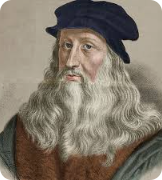
Answer: Leonardo DA VINCI (i.e. “artist”). Solution is INC (a recognised abbreviation of “included”) placed “in” DAVID (i.e. “Michaelangelo’s work”) once its last letter has been removed (indicated by “most of”), like so: DAV(INC)I. Like composers, artists are another whacking great Times crossword cliché, so…
- Cinematic illusions in various places retaining one property (7,7)
Answer: SPECIAL EFFECTS (i.e. “cinematic illusions”). Solution is an anagram (indicated by “various”) of PLACES wrapped around or “retaining” I (i.e. “[Roman numeral] one”). This is then followed by EFFECTS (i.e. belongings or “property”), like so: SPEC(I)AL-EFFECTS.
- Public meeting supporting everything except the leader (5)
Answer: FORUM (i.e. “public meeting”). Solution is FOR (i.e. “supporting”) followed by SUM (i.e. “everything”) once its first letter has been removed (indicated by “except the leader”), like so: FOR-UM.
- Damaging time – very exciting after head quits – finally you will be involved (9)
Answer: TRAUMATIC (i.e. “damaging”). Solution is T (a recognised abbreviation of “time”) followed by DRAMATIC (i.e. “very exciting”) once its first letter has been removed (indicated by “after head quits”) and the remainder has been wrapped around or having “involved” the last or “final” letter of “you”, like so: T-RA(U)MATIC.
- Acquire records covering end of Prince with no mention of Queen (7)
Answer: ACHIEVE (i.e. “acquire”). Solution is ARCHIVE (i.e. “records”) with the R removed (indicated by “no mention of Queen” – R being a recognised abbreviation of the Latin Regina) and the remainder wrapped around or “covering” E (i.e. “end [letter] of Prince”), like so: ACHI(E)VE.
- Governor having message from bank being put back (13)
Answer: REINSTATEMENT (i.e. “being put back”). Solution is REIN (i.e. “governor” or something that controls) followed by STATEMENT (i.e. “message from bank”).
- Sound science? A backing for science entails University investing in expense (9)
Answer: ACOUSTICS (i.e. “sound science”). Solution is A and SCI (a recognised abbreviation of “science”, e.g. in sci-fi), the latter reversed (indicated by “backing”). This is all then wrapped around or “entailing” U (a recognised abbreviation of “university”) once first placed “in” COST (i.e. “expense”), like so: A-(CO(U)ST)-ICS.
- Sharpens tip of lancet, to make true (6)
Answer: HONEST (i.e. “true”). Solution is HONES (i.e. “sharpens”) followed by T (i.e. “tip of lancet”, i.e. the last letter of “lancet”).
- Stop blokes seizing attention – start of tender message of love (10)
Answer: ENDEARMENT (i.e. “message of love”). Solution is END (i.e. “stop”) and MEN (i.e. “blokes”) all wrapped around or “seizing” EAR (i.e. “attention”). This is all then followed by T (i.e. “start [letter] of tender”), like so: (END-(EAR)-MEN)-T.
- Dimension not initially given for cube (5)
Answer: EIGHT (i.e. “cube” of two, i.e. 2 x 2 x 2). Solution is HEIGHT (i.e. “dimension”) with the first letter removed (indicated by “not initially”).
Down clues
- Party in charge in Asian country after uprising (6)
Answer: SOCIAL (i.e. an informal “party” or gathering of a club or other organised group). Solution is IC (a recognised abbreviation of “in charge”) placed “in” LAOS (i.e. “Asian country”) and the whole reversed (indicated by “after uprising” – this being a down clue), like so: SO(CI)AL.
- Request certain suggestions about river journeys offering a good time (8,5)
Answer: PLEASURE TRIPS (i.e. “journeys offering a good time”). Solution is PLEA (i.e. “request”) followed by SURE (i.e. “certain”) and TIPS (i.e. “suggestions”) once wrapped “about” R (a recognised abbreviation of “river”), like so: PLEA-SURE-T(R)IPS.
- Profligate vacation’s ending in French city (5)
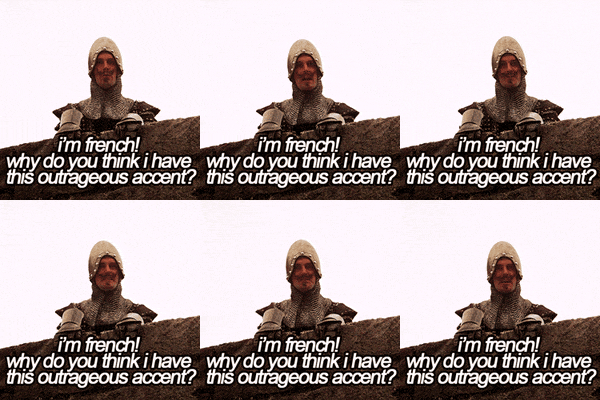
Answer: ROUEN (i.e. “French city”). Solution is ROUE (i.e. “profligate”) followed by N (i.e. “vacation’s ending” letter). Times setters can’t help themselves when it comes to anything French. It’s like cocaine for them. Have a meme.
- Rocker’s equivalent to this roller? (7)
Answer: TROLLEY. Clue plays on the phrases “off one’s rocker” and “off one’s trolley”, both “equivalent” phrases describing madness. TROLLEYS, meanwhile, can be described as “roller” on account of them having wheels. You get the idea.
- Delivery chap who’s peckish? (9,3)
Answer: KISSOGRAM MAN. Clue plays on “peck” being an informal word for a KISS. Another where you get the idea.
- It’s provocative carrying stone clubs, for example (4,4)
Answer: TEST CASE (i.e. “example”). Solution is TEASE (i.e. “it’s provocative”) wrapped around or “carrying” ST (a recognised abbreviation of “stone” weight) and C (a recognised abbreviation of “clubs” used in card games), like so: TE(ST-C)ASE.
- Prepare Parisian who will cut recording (5)
Answer: EQUIP (i.e. “prepare”). Solution is QUI (i.e. “Parisian who”, i.e. the French for “who”) placed in or “cutting” EP (i.e. “recording”, specifically an Extended Play), like so: E(QUI)P. Mon dieu! More French, eh? Well, have another meme then.
- To sum up about computers etc, lately disheartened to a great extent (10)
Answer: INFINITELY (i.e. “to a great extent”). Solution is IN FINE (i.e. “to sum up” – Latin, donchaknow) wrapped “about” IT (i.e. “computers, etc”, short for Information Technology) and followed by LY (i.e. “lately disheartened”, i.e. the word “lately” with all its middle letters removed, like so: INFIN(IT)E-LY. Latin is another big draw for Times setters. One can forgive abbreviations, e.g. R for Rex (king) or Regina (queen), as these are often used in cryptic crosswords, but Latin phrases? Come off it. Latin wonks have got a whole crossword for that in the main paper. Have another classics demerit.
- American President initially has reduced chilly reception, being unable to make speech? (7)
Answer: APHASIC (i.e. “unable to make speech”). Solution is A (a recognised abbreviation of “American”) followed by P (i.e. “President initially”, i.e. the first letter of “President”), then HAS and ICY (i.e. “chilly reception”) once its last letter has been removed (indicated by “reduced”), like so: A-P-HAS-IC.
- A passion arising in celebrity circus performer (9)
Answer: AERIALIST (i.e. “circus performer”). Solution is A followed by IRE (i.e. “passion”) reversed (indicated by “arising” – this being a down clue). This is all then followed by A-LIST (i.e. “celebrity”), like so: A-ERI-A-LIST.
- Impressive tango? Rash going topless (5)
Answer: TASTY (i.e. “impressive”). Solution is T (“tango” in the phonetic alphabet) followed by HASTY (i.e. “rash”) once its first letter has been removed (indicated by “going topless”), like so: T-ASTY.
- Comedy film that’ll have you thinking of better activities? (1,3,2,3,5)
Answer: A DAY AT THE RACES (i.e. 1937 “comedy film” starring the Marx Brothers). Clue plays on “betters” being punters at a racecourse. While I’m a fan, it’s not lost on me that ancient movies are another Times crossword staple. Some might say that this is to ensure the puzzle stands the test of time. Setting aside the somewhat grand assertion there, are you seriously telling me the big-hitting Oscar-winning films of the last 25 years are all going to be forgotten within a generation? I doubt it. Have a demerit.
- Old film star’s answer provided while tucking into Orvieto? (9)
Answer: Rudolph VALENTINO (i.e. “old film star”). Solution is A (a recognised abbreviation of “answer”, as in Q&A) and LENT (i.e. “provided”) both placed or “tucked into” VINO (i.e. “Orvieto”, a white wine from Italy), like so: V(A-LENT)INO. Fine if you know what an Orvieto is, but then I’m no wine expert.
- Not to be swallowed, even after removing first couple of crusts (8)
Answer: INEDIBLE (i.e. “not to be swallowed”). Solution is INCREDIBLE (i.e. also “not to be swallowed” in a different sense) with the CR “removed”, being the “first couple [of letters] of crusts”. For all my grousing, this was nicely worked.
- Very absorbed by period leading to spring (10)
Answer: SPELLBOUND (i.e. “very absorbed”). Solution is SPELL (i.e. “period”) followed by BOUND (i.e. to “spring” or leap).
- Two were annoying about Frenchmen having moved in (10)
Answer: IMMIGRATED (i.e. “moved in”). Solution is II (i.e. “two” expressed as Roman numerals) and GRATED (i.e. “were annoying”) all wrapped “about” MM (i.e. “Frenchmen”, M being a recognised abbreviation of “Monsieur”), like so: I(MM)I-GRATED. No need for the French meme this time – M is often clued as a Frenchman in cryptic crosswords.
- Lots of strands and upturned components in feature of dress (9,5)
Answer: SPAGHETTI STRAP (i.e. “feature of dress”). Solution is SPAGHETTI (i.e. “lots of strands”) followed by PARTS (i.e. “components”) once the latter has been reversed (indicated by “upturned” – this being a down clue).
- Excuse an ex-tutee freaking out (9)
Answer: EXTENUATE (i.e. “excuse”). Solution is an anagram (indicated by “freaking out”) of AN EX-TUTEE.
- Outcome of trial? Exiled to that place in parts of London (8)
Answer: SENTENCE (i.e. an “outcome of trial”). Solution is SENT (i.e. “exiled”) followed by HENCE (i.e. “to that place”) once the H has been removed (indicated by “in parts of London”, as in ‘ow all ‘em cockneys’re always droppin’ their bleedin’ aitches inney?), like so: SENT-ENCE.
- Encouraging to receive a great success in old sport (13)
Answer: CHARIOTEERING (i.e. “old sport”). Solution is CHEERING (i.e. “encouraging”) wrapped around or “receiving” A and RIOT (i.e. “great success”), like so: CH(A-RIOT)EERING.
- Expensive rental to secure church? There are obstacles to participating in this (12)
Answer: STEEPLECHASE (i.e. “there are obstacles to participating in this”). Solution is STEEP (i.e. “expensive”) followed by LEASE (i.e. “rental”) once wrapped around or “securing” CH (a recognised abbreviation of “church”), like so: STEEP-(LE(CH)ASE).
- Surface on a sea yielding zero for lobster or similar (10)
Answer: CRUSTACEAN (i.e. “lobster or similar”). Solution is CRUST (i.e. “surface”) followed by A and OCEAN (i.e. “sea”) once the O has been removed (indicated by “yielding zero”), like so: CRUST-A-CEAN.
- Majestic display fed by complete source of electricity (9)
Answer: SOVEREIGN (i.e. “majestic”). Solution is SIGN (i.e. “display”) wrapped around or “fed by” OVER (i.e. “complete” or finished) and E (i.e. “source of electricity”, i.e. the first letter of “electricity”), like so: S(OVER-E)IGN.
- Tyrant upheld nonsense to support suppressing court (8)
Answer: DICTATOR (i.e. “tyrant”). Solution is ROT (i.e. “nonsense”) and AID (i.e. “to support”) all reversed (indicated by “upheld” – this being a down clue) and wrapped around or “suppressing” CT (a recognised abbreviation of “court”), like so: DI(CT)A-TOR.
- A lot of fresh confusion after invasion by one deadly opponent (7)
Answer: NEMESIS (i.e. “deadly opponent”). Solution is NEW (i.e. “fresh”) with its last letter removed (indicated by “a lot of”) and the remainder followed by MESS (i.e. “confusion”) once wrapped around or “invaded” by I (i.e. “[Roman numeral] one”), like so: NE-MES(I)S.
- Salesman in Florida working at top speed (4,3)
Answer: FLAT OUT (i.e. “working at top speed”). When written as FLA TOUT the solution also satisfies “salesman in Florida” – FLA being a recognised abbreviation of “Florida”.
- County’s attraction – cheap accommodation? (6)
Answer: BEDSIT (i.e. “cheap accommodation”). Solution is BEDS (i.e. “county” – short for Bedfordshire) followed by IT (i.e. physical “attraction”).
- River mouth pollution requiring switch to other side (5)
Answer: FIRTH (i.e. “river mouth”). Solution is FILTH (i.e. “pollution”) with the L swapped for or “switched to” R (indicated by “to other side”, i.e. from left to right), like so: FI(L)TH => FI(R)TH.
- Minute articles from the past? I don’t believe it (2,3)
Answer: MY EYE (i.e. “I don’t believe it”). Solution is M (a recognised abbreviation of “minute” followed by YE and YE (i.e. “articles from the past”, i.e. ye olde form of “the”).
- Negative feeling surrounding small expedition (5)
Answer: HASTE (i.e. “expedition”). Solution is HATE (i.e. “negative feeling”) wrapped around or “surrounding” S (a recognised abbreviation of “small”), like so: HA(S)TE.
 Lucian Poll's Web Ramblings
An OK puzzle for me. I missed the Latin – In Fine – 8d so thx for that explanation Lucian.
At my age, and being very interested in history, I’m not too bothered by using references to very famous old plays/books etc. It would be interesting to know the cryptic puzzle’s solvers’ age profile. If we are, on average, retired or nearing retirement, The Times might merely be pleasing it’s audience. References to Swifty fans’ favourites for song titles (and similarly modern equivalent films or vampire novels etc) for example, might cause cryptic fans to buy another newspaper.
Anyway, thank you for the continued entertaining crossword tutoring.
In answer to the question, I am 88 and all pop music leaves me cold, though I do know the names of Swifty and a few other individuals and groups, old and current. I got 30a only because in my teens I was mad on motorcycles and took both the Motorcycle and Motorcycling, two monthly magazines. In one, a columnist called himself Ixion, and I’ve remembered his explanation about the burning wheel ever since.
This one wasn’t much fun – too many deletion-type clues and several which seemed so loose we could only pencil-in the answers. Not to mention Respighi!
4D (trolley) was so contrived we didn’t quite believe the answer.
8D … infinitely is not the same as “to a great extent”.
But like you, we enjoyed the inedible/incredible clue. And also the cheeky “my eye”.
Clearly a lot of wearisome work for you Lucian, so thank you.
I found an artist known as El Angel – a confusing alternative answer for 43a.
Lucian, don’t go! I love doing a Jumbo with my grown-up son and when we’re stuck, we “consult Lucian”.
I did this one mostly on my own (grown-up son got Ixion straight away, but then he had to go), but I’ve still consulted Lucian because I couldn’t see why ENCE fitted “to that place in parts of London” in 29d. My best guess was a mish-mash of postcodes, but it turns out I’m a pedant.
Let me just say, in a whining, pedantic tone, that “hence” means “from this place”; “to that place” is “thither”. From/to this place = hence/hither; from/to that place = thence/thither.
I hope this doesn’t fuel your obviously growing frustration at the Jumbos. We all have our bêtes-noirs (sorry!) and grumbles. I remember my pedantic outrage at “sawed-off” being a solution to some clue about shotguns (sawn-off!), and as a Scot I’m often flummoxed at clues that involve homophones to English ears but not mine. I’m readily assuaged by shouting out “sod off” (to me, a homophone of “sawed-off”).
Please find the joy again Lucian.