
A toughie this week but a fairly dull one thanks to so many tired Times crossword clichés. It reminded me exactly why I’m winding down these posts. I mean, the case for the prosecution this week runs as nearly as long as the rest of the post. All this means there are now 6 Jumbos to go.
Now that the competition deadline has passed you can find my completed grid below along with explanations of my solutions where I have them. I hope you find them helpful. If you’ve given up on a recent Jumbo then you might find my Just For Fun page of use, where you’ll find links to solutions for hundreds of the things.
Thanks for your patience and input. Till next time, stay safe out there kids.
LP

The case for the prosecution





Across clues
- Orpheus finally coming to Stygian realm – in Ray-Bans? (6)
Answer: SHADES (i.e. “Ray-Bans”, both referencing sunglasses). Solution is S (i.e. “Orpheus finally”, i.e. the last letter of “Orpheus”) followed by HADES (i.e. “Stygian realm”). I’d usually slap a classics demerit on this one, but this was quite wittily done.
- Your writer writes in crimson – not green (7)
Answer: RIPENED (i.e. “not green”). Solution is I PEN (i.e. “your writer writes” from the point of view of the setter) all placed “in” RED (i.e. “crimson”), like so: R(I-PEN)ED.
- Distinct character’s island god embracing holy work (8)
Answer: IDENTITY (i.e. “distinct character”). Solution is I (a recognised abbreviation of “island”) and DEITY (i.e. “god”) wrapped around or “embracing” NT (i.e. “holy work”, specifically the New Testament of The Bible), like so: I-DE(NT)ITY.
- Old mark used in complex cash agreement with China for currency control (8,4,9)
Answer: EXCHANGE RATE MECHANISM (i.e. “currency control”). Solution is EX (i.e. “old” or former) and M (a recognised abbreviation of “mark”, the former currency of Germany) all wrapped around or having “in” an anagram (indicated by “complex”) of CASH AGREEMENT and CHINA, like so: EX(CHANGERATEMECHANIS)M.
- Literary composition on page – very small piece? (8)
Answer: PARTICLE (i.e. “very small piece”). Solution is ARTICLE (i.e. “literary composition”) placed “on” or after P (a recognised abbreviation of “page”), like so: P-ARTICLE.
- Bone from three in the reckoning? (7)
Answer: STERNUM (i.e. “bone”). Solution is TERN (i.e. a set of “three”, a variant meaning of the word) placed “in” SUM (i.e. “reckoning”), like so: S(TERN)UM.
- Duck, then another ancient Briton saves for cat (6)
Answer: OCELOT (i.e. species of “cat”). Solution is O (i.e. “duck”, a zero score) followed by “another” O once placed in or “saved” by CELT (i.e. “ancient Briton”), like so: O-CEL(O)T.
- Means to wipe material linked with online pest (6,4)
Answer: TOILET ROLL (i.e. “means to wipe”). Solution is TOILE (i.e. a kind of cotton “material”) followed by TROLL (i.e. “online pest”). One I remembered from a previous puzzle, which made this a little easier.
- In the cooking dad was all for this culinary classic (7,5)
Answer: WALDORF SALAD (i.e. “culinary classic”). Solution is an anagram (indicated by “in the cooking”) of DAD WAS ALL FOR.
- Murphy from south meeting reflective Unionists (4)
Answer: SPUD (i.e. “Murphy”, both slang words for a potato). Solution is S (a recognised abbreviation of “south”) followed by DUP (i.e. “Unionists”, specifically the Democratic Unionist Party) once reversed (indicated by “reflective”), like so: S-PUD.
- Airport dispute dogging former PM (8)
Answer: HEATHROW (i.e. “airport”). Solution is ROW (i.e. “dispute”) placed after or “dogging” Edward HEATH (i.e. “former PM”), like so: HEATH-ROW. Ol’ Teddy is always being used in cryptic crosswords, but The Times aren’t exactly alone in this regard so no demerit.
- Ring through often on such personal extensions? (8)
Answer: EARLOBES. Solution satisfies the clue as a whole, taking “ring” to be an earring.
- Isn’t that Tatum FBI agent’s arrested? Or Craven? (5-7)
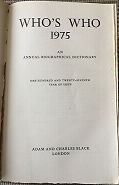
Answer: FAINT-HEARTED (i.e. “craven” – ignoring the misleading capitalisation). Solution is AIN’T HE ART (i.e. “isn’t that Tatum”, referring to Art Tatum, An American jazz pianist. No, me neither) placed in or “arrested by” FED (i.e. slang for an “FBI agent”), like so: F(AIN’T-HE-ART)ED. Definitely worthy of a Who’s Who demerit.
- Appearance of fast current – no going back (10)
Answer: EXPRESSION (i.e. “appearance”). Solution is EXPRESS (i.e. “fast”) followed by I (a recognised abbreviation of an electrical “current” used in physics) and NO once reversed (indicated by “going back”), like so: EXPRESS-I-ON.
- Comedy at last in two sections provides amusing turn (5,5)
Answer: PARTY PIECE (i.e. “amusing turn”). Solution is Y (i.e. “comedy at last”, i.e. the last letter of “comedy”) placed “in” between PART and PIECE (i.e. “two sections”), like so: PART-(Y)-PIECE.
- Reward – our men earn it corruptly (12)
Answer: REMUNERATION (i.e. “reward”). Solution is an anagram (indicated by “corruptly”) of OUR MEN EARN IT.
- Revealing source, legendary Swiss thanks the French (8)
Answer: TELLTALE (i.e. a “revealing source”). Solution is William TELL (i.e. “legendary Swiss”) followed by TA (i.e. “thanks”) and LE (i.e. “the French”, i.e. the French for “the”).
- Engineer’s instrument is one that’s not working (8)
Answer: ORGANISE (i.e. to “engineer”). Solution is ORGAN (i.e. musical “instrument”) followed by IS and ONE once the ON has been removed (indicated by “that’s not working”), like so: ORGAN-IS-E.
- Said to be in power shower (4)
Answer: RAIN (i.e. “shower”). Solution is a homophone (indicated by “said”) of REIGN (i.e. “to be in power”).
- One standing in for royal pair, earnest man discharging seconds (6,6)
Answer: PRINCE REGENT (i.e. “one standing in for royal”). Solution is PR (a recognised abbreviation of “pair”) followed by SINCERE GENT (i.e. “earnest man”) once the S has been removed (indicated by “discharging seconds” – S being a recognised abbreviation of “seconds”), like so: PR-(INCERE-GENT).
- Free hotel in secure enclosure close to town? That’s an old chestnut! (10)
Answer: COPENHAGEN (i.e. “that’s an old chestnut” – this is referring to the Duke of Wellington’s horse which he rode at the Battle of Waterloo, described as “a dark chestnut with two white heels”). Solution is OPEN (i.e. “free”) and H (“hotel” in the phonetic alphabet) both placed “in” CAGE (i.e. “secure enclosure”) and followed by N (i.e. “close to town”, i.e. the last letter of “town”, like so: C(OPEN-H)AGE-N. Come on, how many people are going to know this? Definitely worthy of a History Today demerit.
- American inventor’s instinct about protecting little girl (6)
Answer: Thomas EDISON (i.e. “American inventor”). Solution is NOSE (i.e. “instinct”) reversed (indicated by “about”) and wrapped around or “protecting” DI (i.e. “little girl”, i.e. a shortened form of DIANA), like so: E(DI)SON. I’ll hang fire on the Who’s Who demerit as Edison is rather well known.
- Fireplace feature inlaid with nickel and stone (7)
Answer: GRANITE (i.e. “stone”). Solution is GRATE (i.e. “fireplace feature”) wrapped around or “inlaid with” NI (chemical symbol of “nickel”), like so: GRA(NI)TE.
- Branch specialised in launching carpeting line (8)
Answer: ROCKETRY (i.e. “branch specialised in launching”). Solution is ROCKET (i.e. “carpeting”, both meaning a right ticking-off) followed by RY (i.e. “line”, specifically a recognised abbreviation of a railway).
- Male in great metropolis accommodates writer following fire in research centre (6,6,9)
Answer: ATOMIC ENERGY AUTHORITY (i.e. “research centre”). Solution is TOM (i.e. “male” cat, also a bloke’s name) placed “in” AI (i.e. “great” or excellent, i.e. A1 with the 1 replaced by its Roman numeral equivalent) and CITY (i.e. “metropolis”). This is then wrapped around or “accommodating” AUTHOR (i.e. “writer”) once placed after or “following” ENERGY (i.e. “fire”), like so: A(TOM)I-C(ENERGY-AUTHOR)ITY.
- Unbeatable on new wicket that turns, covered loosely (8)
Answer: BESTREWN (i.e. “covered loosely”). Solution is BEST (i.e. “unbeatable”) and RE (i.e. “on” or regarding – think email replies) followed by N (a recognised abbreviation of “new”) and W (ditto “wicket”, used in cricket) once these latter two have been reversed (indicated by “that turns”), like so: BEST-RE-(W-N).
- Ray and Henry escaping village near Tokyo once (7)
Answer: TORPEDO (i.e. a type of “ray”, as in the fish). Solution is THORP (i.e. another word for a “village”) with the H removed (indicated by “Henry escaping” – H being a recognised abbreviation of “Henry”, a unit of measurement) and the remainder followed or placed “near” EDO (i.e. “Tokyo once”, i.e. the former name of Tokyo), like so: TORP-EDO. Probably the toughest clue of the lot. It’s tempting to slap a History Today on this one, but I do have a begrudging respect for the misdirection at play here.
- Onegin, for one, in central Greece throttling upper-class dope (6)
Answer: EUGENE (i.e. “Onegin, for one”, after the novel in verse by Alexander Pushkin. Other Eugenes are available, though perhaps none so fitting a dull Times crossword cliché). Solution is EE (i.e. “central Greece”, i.e. the middle letters of “Greece”) wrapped around or “throttling” U (a recognised abbreviation of the “upper-class”) and GEN (i.e. info or “dope”), like so: E(U-GEN)E.
Down clues
- Why we don’t start with an ascendant animal? (5)
Answer: HYENA (i.e. “animal”). Solution is WHY WE with the first letters of each removed (indicated by “don’t start”). This is then followed by AN reversed (indicated by “ascendant” – this being a down clue), like so: (HY-E)-NA.
- Dance technique never succeeded with fellow in plant (11)
Answer: DICOTYLEDON (i.e. “plant” group). Solution is DISCO (i.e. “dance”) and STYLE (i.e. “technique”) with the S removed from both (indicated by “never succeeded” – S being a recognised abbreviation of “succeeded”) and the remainders followed by DON (i.e. “fellow”), like so: DICO-TYLE-DON. You can imagine the amount of effing and blinding this one elicited once it dropped.
- Tom perhaps in Ascot agitated, somewhat abrupt in bars? (8)
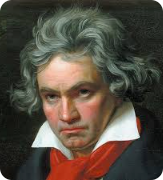
Answer: STACCATO (i.e. “somewhat abrupt in [musical] bars”). Solution is CAT (i.e. “tom, perhaps”, a male thereof) placed “in” an anagram (indicated by “agitated”) of ASCOT, like so: STAC(CAT)O. You know the drill. Musical lingo is always, always, ALWAYS in Jumbos, and Beethoven continues to be angry about it.
- Mischievous journey up Parisian street is entertaining (5)
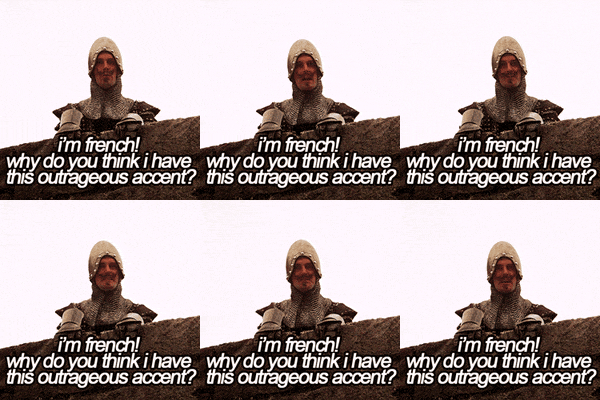
Answer: ROGUE (i.e. “mischievous”). Solution is GO (i.e. “journey”) reversed (indicated by “up” – this being a down clue – and placed in or “entertained” by RUE (i.e. “Parisian street”, i.e. the French for “street”), like so: R(OG)UE. I know “rue” is fairly common knowledge, but I’m still deploying the meme.
- Country girl in Reading? (7)
Answer: PERUSAL (i.e. “reading”, ignoring the misleading capitalisation). Solution is PERU (i.e. “country”) followed by SAL (i.e. a “girl’s” name).
- Woman’s experience after capture is hell (11)
Answer: NETHERWORLD (i.e. “hell”). Solution is HER WORLD (i.e. “woman’s experience”) placed “after” NET (i.e. to “capture”), like so: NET-(HER-WORLD).
- Twinkling in private room reveals Screwtape, say (5)
Answer: DEMON (i.e. “Screwtape, say” – apparently this is after a satirical novel by C S Lewis, a new one on me). Solution is MO (i.e. a moment or “twinkling” or short period of time) placed “in” DEN (i.e. “private room”), like so: DE(MO)N.
- Trouble means covering for government department (9)
Answer: INCOMMODE (i.e. to “trouble”). Solution is INCOME (i.e. “means”) wrapped around or “covering” MOD (i.e. “government department”, specifically the Ministry of Defence), like so: INCOM(MOD)E.
- Inspiration displayed by punter at Oaks (5)
Answer: ERATO (i.e. “inspiration”, one of the nine Muses of Greek mythology). “Displayed by” indicates the solution has been hidden in the clue, like so: PUNT(ER AT O)AKS. Greek mythology is always going to attract a demerit from me.
- Flash damaged a port initially set for obsolete browser? (11)
Answer: TRICERATOPS (i.e. “obsolete browser”, a browser being an animal that feeds on young twigs and shoots. We’ve seen this usage of “browser” quite a few times in recent Jumbos. Are setters all copycats or is there some newsletter going round between them all?
- Having rolled a lofty pitch, test results in draw (7)
Answer: TOMBOLA (i.e. game of chance or “draw”). Solution is A, LOB (i.e. “lofty pitch”) and MOT (i.e. motoring “test”) all reversed (indicated by “rolled”), like so: TOM-BOL-A.
- Gold leaf walls in Chinese family home (9)
Answer: ORPHANAGE (i.e. “home”). Solution is OR (i.e. “gold” in heraldry) followed by PAGE (i.e. “leaf” of a book) once wrapped around or “walling in” HAN (i.e. “Chinese family” or dynasty), like so: OR-P(HAN)AGE.
- Love goddess hosting a function (7)
Answer: OPERATE (i.e. “function”). Solution is O (i.e. “love”, a zero score in tennis) and ATE (i.e. Green “goddess” of mischief) all wrapped around or “hosting” PER (i.e. “a”, as in there being fourteen pounds a stone), like so: O-(PER)-ATE. You see Ate all the time in Jumbos, and again we’re dipping into Greek mythology so have a demerit.
- More vulgar chap appropriating grand language (3,6)
Answer: LOW GERMAN (i.e. “language” – I’d like to think the only difference between this and High German is you’d say the latter in a squeaky voice, but I suspect I’m wrong). Solution is LOWER (i.e. “more vulgar”) and MAN (i.e. “chap”) all wrapped around or “appropriating” G (a recognised abbreviation of “grand”), like so: LOW(G)ER-MAN.
- Voluntarily avoids having worries about planet (8)
Answer: FORBEARS (i.e. “voluntarily avoids”). Solution is FEARS (i.e. “worries”) wrapped “about” ORB (i.e. “planet”), like so: F(ORB)EARS.
- Othello for example right – heartless loser crushed (5,4)
Answer: TITLE ROLE (i.e. “Othello for example”). Solution is TITLE (i.e. “for example right”, as in titles such as Right Honourable) followed by an anagram (indicated by “crushed”) of LOSER once the middle letter has been removed (indicated by “heartless”). Oh look, another Times setter that simply can’t help themselves when it comes to crowbarring history’s only playwright into their Jumbo. Seriously, how many other title roles could the setter have chosen from? Good grief. This was heading for cliché city to begin with but this is an instant kill.
- With online scam over, tightwad endlessly cut spending (9)
Answer: ECONOMISE (i.e. “cut spending”). Solution is E-CON (i.e. playfully an “online scam”) followed by O (a recognised abbreviation of “over” used in cricket) and MISER (i.e. “tightwad”) once its last letter has been removed (indicated by “endlessly”), like so: E-CON-O-MISE.
- Hearty pie and mash prepared – time to tuck in (8)
Answer: SHIPMATE (i.e. “hearty”, an old form of address thereof). Solution is an anagram (indicated by “prepared”) of PIE and MASH once wrapped around or “tucking in” T (a recognised abbreviation of “time”), like so: SHIPMA(T)E.
- Dutchman’s pipe in long drain (7)
Answer: PINESAP (i.e. “Dutchman’s pipe” – plants, predictably). Solution is PINE (i.e. “long” or yearn for) followed by SAP (i.e. to “drain”). The wordplay was easier than verifying the solution. Some assert both Pinesap and Dutchman’s pipe are examples of Monotropa hypopitys and definitely not Atrisolochia; Chambers, meanwhile, insists a Dutchman’s Pipe is an Aristolochia. I’ll let the experts argue it out among themselves. I literally couldn’t care.
- Bent investigator? (6,5)
Answer: TALENT SCOUT. Solution satisfies the clue as a whole, taking TALENT to mean “disposition” (Chambers) rather than a natural ability. Should I issue demerits for diving too deep into the definitions? A bit late now, I suppose. Meanwhile, this is a repeat from about four months ago in grid 1674, where the clue on that occasion was “person hunting for a certain gift”.
- Conservative having to fix pain, taking hour outside (5-6)
Answer: RIGHT-WINGER (i.e. “Conservative”). Solution is RIG (i.e. “to fix”) followed by TWINGE (i.e. “pain”) with HR (a recognised abbreviation of “hour”) placed “outside” of it, like so: RIG-H(TWINGE)R.
- Hostile Republican consumed in obsession (11)
Answer: THREATENING (i.e. “hostile”). Solution is R (a recognised abbreviation of “Republican”) and EATEN (i.e. “consumed”) both placed in or “consumed” by THING (i.e. “obsession”, as in having a thing about someone), like so: TH(R-EATEN)ING.
- Ivy for one always the ingenue? (9)
Answer: EVERGREEN (i.e. “ivy for one” – other evergreen varieties are available). Solution is EVER (i.e. “always”) followed by GREEN (descriptive of “the ingenue”, i.e. an innocent or naïve person).
- A relative skipping one grips point in narrative (8)
Answer: ANECDOTE (i.e. “narrative”). Solution is A and NIECE (i.e. “relative”) once the I has been removed (indicated by “skipping [Roman numeral] one”). This is then all wrapped around or “gripping” DOT (i.e. “point”), like so: A-NEC(DOT)E.
- Beam in relief having risen in rank (7)
Answer: RADIATE (i.e. “beam”). Solution is AID (i.e. “relief”) reversed (indicated by “having risen” – this being a down clue) and placed “in” RATE (i.e. to “rank”), like so: RA(DIA)TE.
- Burn body of old woman found in Minoan’s island (7)
Answer: CREMATE (i.e. “burn”). Solution is MA (i.e. “old woman”, both informal names for one’s mother) placed “in” CRETE (i.e. “Minoan’s island”), like so: CRE(MA)TE.
- Interference with signal in northern French department? (5)
Answer: NOISE (i.e. “interference with signal”). Solution is N (a recognised abbreviation of “northern”) followed by OISE (i.e. “French department” – a department being a region of France). Ah, let’s get my favourite meme out again.
- Native Alaskan beer presented without head (5)
Answer: ALEUT (i.e. “native Alaskan”). Solution is ALE (i.e. “beer”) followed by PUT (i.e. “presented”) once the first letter has been removed (indicated by “without head”), like so: ALE-UT. If you want proof that this week’s setter is being deliberately awkward, consider how many proper words – you know, the kind you might actually find in a dictionary – fit the letters A-E-T. All demerits this week are well-earned. This is one setter I’m not going to miss when I’m done.
- Relationship over with call for sailor’s attention? (5)
Answer: RATIO (i.e. “relationship” between two or more measurements). Solution is OI, TAR! (i.e. “call for sailor’s attention”) all reversed (indicated by “over”), like so: RAT-IO. Another recent repeat, literally appearing in last week’s grid. But you try telling Times puzzle editors that.
- Material about to be ignored in youngster’s drawer (5)
Answer: RAYON (i.e. “material”). Solution is CRAYON (i.e. “youngster’s drawer”) with the C removed (indicated by “about to be ignored” – a recognised abbreviation of “circa” being C).
 Lucian Poll's Web Ramblings
thanks again for doing this. Your solutions are invaluable for helping me learn the dark art of solving cryptic crosswords. I shall miss your answers greatly if you really do stop
One man’s meat is another man’s poison! I really liked “Ain’t he Art?” but for me, Art Tatum is very well known.
Also, having the memory of a goldfish, I didn’t remember seeing Ratio recently so “Oi, tar!” raised a smile. Another chuckle for Shipmate.
I thought “Dicotyledon” was ridiculously obscure, but maybe a gardening enthusiast would disagree.
Aye, this felt quite ‘dug out’ and hard work. Revisiting my tally of cards – my demerit system akin to your more specific meme one – I gave out cards for:
15A STERNUM – YELLOW CARD – due to the ridiculously obscure ‘tern’ definition for three… The bird was right there to be used; but to fair that might have then veered to far to the other – easy – side of the balance? Getting the balance right with cryptic is hard… but I do sometimes object to stupidly pointlessly obscure!
34A COPENHAGEN – YELLOW CARD – and would have been red for this obscurity but mitigated by the gettable wordplay.
3D DICOTYLEDON – RED CARD – acceptable in a crossword in a biologist’s magazine…
10D ERATO – YELLOW CARD – for the same Greek mythology reasons as you!
19D OPERATE – DITTO – ditto
Conversely I didn’t overly mind the reference to Othello because – in only expecting one to know Othello was a play and title role – it at least didn’t expect me to have a narrow-high-culture-worshipping encyclopaedic knowledge of the Shakespearean canon.
And I thought ALEUT was a reasonably expected bit of knowledge or easily referenced from the not-overly-cryptic clue definition.
I also felt Dicotyledon was very poor. Not only would very few people ever of heard of it, but who the hell is going to remember it or even bother to. At least refs to classic art or ancient history have reasonably wide ‘interest’ – well, I think so anyway.
Thanks again Lucian. We’ll miss you